Tree Service

Tree Service

Tree and Shrub Removal

Certain circumstances require removal of your shrubs and plants. This can be a stressful situation and we want you to relax while we take care of all of your removal needs. It is critical to utilize care and precaution when surveying a tree or shrub removal. We work hard to ensure the safety of people and property. San Antonio Tree Service will work hard so no harm will come to your home, buildings, or other plants. We employ an experienced team who understand the delicate situation in each tree or shrub removal job. We wants you to relax and trust us with the job you have given us.tree services

Hazardous Tree Removal

Hazardous tree removal is one of the most stressful situations for any home or business owner. Preparation is key when protecting your property and family from a hazardous tree. You can trust us to provide the safest removal of the tree possible. We work hard to help you in this time of need. We work effectively and quickly to remedy and remove these obstacles from your home and property. Safety is key for not only your possessions, but also for our employees. Our employees are trained to approach your hazardous tree removal cautiously and work safely.

Tree Pruning Service

Tree pruning can be a delicate procedure. Shrubs and trees may need to be considered with an understanding of the tree and plant structure. We understand how to employ the entire aesthetic of your plants, to ensure a cohesive pruning for your trees and shrubs. Many aspects must be taken into account when beginning a pruning service. The plan structure, biology, and physiology all make a difference when developing your plant life. Many times the types of plants, perennials and annuals all need to be considered while pruning your larger shrubs and trees. Pruning and trimming should take place whenever there are loose branches, but our Tree Service understands the dormant seasons and how to preserve the health and sap loss.

Tree Trimming Service

Our Tree Service provides its value with committed and experienced individuals who we employ to trim your trees. Commercial and residential tree and plant care is available throughout the San Antonio and Greater San Antonio areas. We employ the latest techniques and quality tools to provide you with the best tree trimming results. Whether your tree is small or large, we understand the appropriate method to ensure the health of your tree, while getting the job done!

Tree and Stump Grinding and Removal

In the unfortunate situation that your tree may need to be completely removed, you must also realize that there is a stump to be removed as well. These unsightly tree stumps can be removed no matter how large or small the tree was. We employ power stump grinders to make mulch and wood chips out of the existing stump. Our Tree Service can grind the stump down to an appropriate level, as deep as 6 to 16 inches. Let us help the aesthetics and design of your residential or commercial lawn, by removing the left over stumps of fallen or dead trees.tree stump removal san antonio

Emergency Tree and Branch Removal

In the event of an emergency, contact our Tree Service. We understand the importance of a quick removal of these hazardous trees and limbs. If you have experienced this situation due to weather or accidents, contact us and we will be able to provide you with the piece of mind needed during this traumatic experience. Do not leave trees or branches in unstable conditions. Call our experienced staff as quickly as possible so we can begin this process fast and safely. Fallen trees are a safety concern in any situation and we pride ourselves on promoting safety and health with all of your trees.

Tree Preservation Service

When adding or redeveloping your home or business, trauma can take place with your trees and surrounding plant life. Our Tree Service can provide a consultation on the appropriate action with plant life. We can advise on how to preserve and minimize the amount of damage done to the important trees and shrubs in your existing home or business. We do not want you to feel like you must remove all plants or trees when developing new buildings. Many times the investigation into your plants is key to planning a new building project. Let us provide our experience and knowledge to you and your building team. We are proud to help you ensure the well being of existing trees and plants.

Shaping

Trees can be relatively easy to control. With the knowledge and experience in Tree Service, we can instruct and develop your tree to grow and shape as you would like. Based on the type of tree and placement, usually there are a few different options for shaping. We can provide you with the umbrella shape of street trees, to reduce the crown. We also provide shrub and hedge shaping. There is a certain art to providing the trees and shrubs with a loose and bright appearance, while keeping them healthy. If started early on, many trees can be controlled to follow a direct line. We suggest that you consult with our professionals when planting new trees and beginning a shaping process.

Organic Lawn Care

Organic Lawn Care

Elise Craig lives in a garden apartment in Portland, Oregon, where children roll in the grass and run barefoot across lawns in the summer light. A year ago, she realized that whenever the landlord spread lawn-care chemicals on the grass, her six-year-old son, Michael, lost bowel and bladder control for weeks afterward.

“Michael’s symptoms came back every time they treated the lawn,” says Craig. “They told us it was safe after a day, so I kept him off the grass for a week or two. Michael still got sick. We were ultimately successful in organizing our community to go organic, but we are about to move, and I may face this battle in our new home with new neighbors.”

In Portland, where Craig organized teams of weed-pulling parents at her son’s school (with help from a principal who’s an organic farmer), the city has put up billboards that say, “Is Your Lawn Chemical-Free? Maybe It Should Be.”

Each year, Americans apply more than 80 million pounds of chemical products–including herbicides, insecticides and fungicides–to their lawns and gardens.

Homeowners often don’t realize the myriad health hazards associated with lawn-care pesticides sold under such innocuous names as Weed & Feed and Bug-B-Gon. These products contain pesticides such as 2,4-D (linked to non-Hodgkin’s lymphoma) and MCPP (associated with soft-tissue cancers).

People think the government would warn them if these widely sold chemicals were known to damage their nervous systems, harm fetuses or give them cancer. None of these long-term adverse health effects are required by law to be listed on product labels.

“Forty years ago, in the enormously praised and fiercely criticized book Silent Spring, Rachel Carson demonstrated the dangers of pesticides,” says H. Patricia Hynes, director of the Urban Environmental Health Initiative at Boston University and author of The Recurring Silent Spring. “Lawn chemical usage has nearly doubled since 1964.”

Pesticides used solely on lawns are not required to undergo the same rigorous testing for long-term health effects as those used on food. No federal studies have assessed the safety of lawn-care chemicals in combination, as most are sold. Because of industry lobbying, the identities of “inert ingredients” are protected as trade secrets under federal law. Pesticides may contain up to 99 percent inert ingredients, some of which are suspected carcinogens, while others are linked to nervous system disorders, liver and kidney damage and birth defects.

“More than 90 percent of pesticides and inert ingredients are never tested for their effects on developing nervous systems,” says John Wargo, director of the Yale Center for Children’s Environmental Health and author of Risks from Lawn-Care Pesticides, a report from Environment and Human Health. “Children are more affected by exposure to such chemicals because they are smaller and their organs are not mature.”

Wargo adds, “Streams and groundwater in the Midwest are contaminated with atrazine, a widely used herbicide linked to sexual mutations in fish and amphibians. Is this the price we pay for green lawns?”

The Natural Resources Defense Council is suing the Environmental Protection Agency for failing to protect the public from environmental and health threats posed by atrazine, which is banned by the European Union. “Atrazine poses a serious cancer risk for millions of Americans,” says Jay Feldman, director of Beyond Pesticides. “Companies, federal and state regulators downplay the hazards of commonly used pesticides.”lawn care

Steps To Pesticide Freedom
Try “natural” alternatives. Chrysanthemum-derived pesticides, diatomaceous earth and boric acid are sold in garden centers. SharpShooter (citric acid) is an effective insecticide. Or make your own solution of three to six tablespoons of dishwashing soap (without degreaser) per gallon of water.

Squirt weeds. Instead of RoundUp, use BurnOut (lemon juice and vinegar) to kill weeds along walkways. And what’s so terrible about clover anyway?

Get rid of grubs. Beneficial nematodes and milky spore kill them.

Choose native plants. Replace grass with ground covers or wildflowers.

Know your insects. Some bugs are beneficial. Ladybugs eat aphids; lacewings eat caterpillars; and praying mantises eat all insects (even each other).

Furnace Troubleshooting

How to Light your Gas Pilot – Furnace Troubleshooting

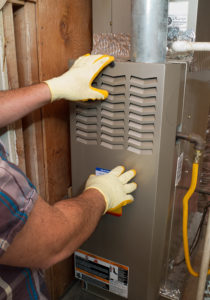
If your homes furnace has stopped working, it is likely that the pilot light has gone out. The pilot light in effect creates an electrical signal, when this signal is interrupted (when the pilot light goes out) the gas control valve will not allow gas to go to the furnace. This is a safety feature that prevents gas build up and explosions. There are different reasons why the pilot light goes ranging from a gust of wind to mechanical problems or gas supply problems. In any case if your furnace is no longer working, the first thing to do is to check to see if the pilot light is working. If it has gone out then you need to see about getting the pilot light re-lit. Here are some recommended steps. Furnace Service

First Thing, Turn off the gas valve.

The first step is to turn of the gas valve. This valve is located at the front of your heater. After you do this, wait approximately 3-4 minutes for the valve to reset itself. After this duration turn the valve to the position that is marked “pilot light”. This position is half way between the “off” position and the “on” position. In this “pilot light” position no actual gas will flow to the burner, however when you hold the “pilot light” button down gas will flow to the pilot light.

Then Find the location of the pilot light.

The pilot light is typically found either under the burner or it can be along side of the burner. Above the pilot burner is a metal cylinder that is to ¼” in diameter and is 2 or 3 inches long. There is a narrow tube that runs up to it. When your pilot burner is lit, the cylinder is in the flame. This cylinder is called a thermocouple is what causes the electrical current that tells the gas valve it is safe to open the gas. Although this may all sound very technical, it will be clearer when you actually are looking at your furnace.

Light the pilot light.

Typically, in order to reach the pilot light with a match, you will need either needle-nose pliers or a length of wire or something that can hold the match up to the place where the pilot light sits. (People often use the long fireplace matches to light their furnaces, they are ideal.) Whether you are using pliers, a length of wire, or long matches, it’s a good idea to practice first, to make sure you can reach the pilot light. So try first with an unlit match.

Now light the match and put it up to the pilot light burner. Press down on the pilot light button so gas will flow to the pilot light burner. The burner should start right away. HOWEVER, KEEP THE BUTTON PRESSED DOWN FOR 60 SECONDS. It can take up to a minute for the special element in the thermocouple to start generating the electrical signal that the control valve needs.

If the pilot light keeps burning after you let go of the button, then all is well. Lastly turn the control valve to “ON” and that should be it. If any of this sounds too complicated or confusing please call your local plumber.Call Today: or visit us @ Trophy Air Conditioning and Heating for a Licensed TechnicianView ourSpecial Offersonline

Are you noticing that you are getting too big of a temperature swing in your rooms during the summer when the air conditioner is running? What’s going on with your air conditioner? The rooms get warm and then they get cold.

Call us or read More @ HVAC Services Katy

Scroll To Top